The Butterfly
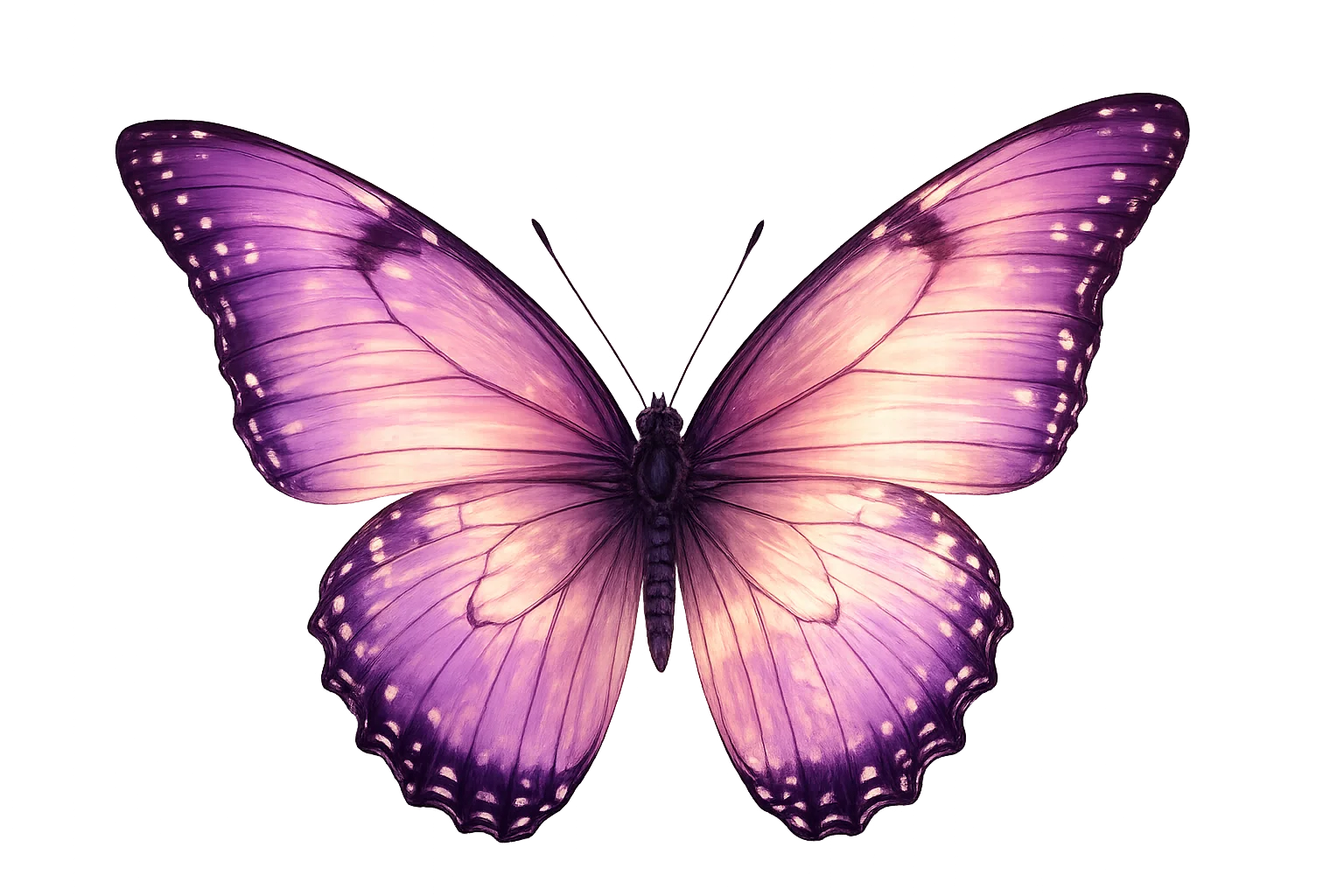
Miranda was like a butterfly: full of life, her existence a brilliant flash of joy and beauty that, while fleeting, touched the hearts of all who knew her. She moved through the world with a lightness and a warmth that made everything around her feel more vivid, more alive. And like a butterfly, she was gone too soon.
When I think about why the butterfly became our symbol, it isn't just about Miranda. It's about every person who has endured domestic violence — every survivor who has had to break free from something that held them captive and find a way to live again. The butterfly carries their stories, too. Their own stories of transformation.
A butterfly's life begins in confinement. It is wrapped tightly inside something it didn't choose, something it cannot control. And the only way out is through — through struggle, through change so total it reshapes every part of what it is. That is what survivors do. They move from fear to a place of safety, and from hurt to healing. They don't just survive the dark. They emerge from it transformed.
The butterfly reminds us that beauty can come from pain. That what has been broken can be remade into something breathtaking. That the struggle itself — the hardest part, the part no one sees — is what gives the wings their strength. Without the fight to break free, the butterfly could never fly.
Every time I see a butterfly, I think of Miranda. I think of the lightness she carried, the color she brought into every room. And I think of the survivors I've met since — women and men and children who have fought their way out of impossible darkness and found their wings. This foundation is for them. The butterfly is for all of us.
“We delight in the beauty of the butterfly, but rarely admit the changes it has gone through to achieve that beauty.”
— Maya Angelou
If you are in immediate danger, call 911. National DV Hotline: 1-800-799-7233. Press ESC or click Exit Now to leave this site quickly.